Tuberculosis.
1949-1952
I was probably working at Hearns for about two years when I was taken ill with Pulmonary Tuberculosis which, of course, ended my career as a butcher.
An x-ray at St Helier Hospital, Carshalton, on 2nd February 1949 confirmed the illness. I spent the next three months in bed at home at North Cheam, awaiting a vacant bed in a Chest Hospital. In the meantime, I was under the care of my local GP, Doctor Evans, and the Sutton Chest Clinic, which was situated at St Helier Hospital. My chest physician was Doctor Harwood.
There was no shortage of home visitors during that time of waiting; my family were very vigilant and friends and relatives would appear almost every day. I whiled away my time with reading, writing and drawing. I also had a radio in the bedroom, an extension from the family set downstairs (no portable radios in those days). One of my favourite radio programmes was the weekly “Hit Parade”, which was the pop music of the day. I even managed to write down the words of most of the popular tunes, (they were easier to understand in those days…).
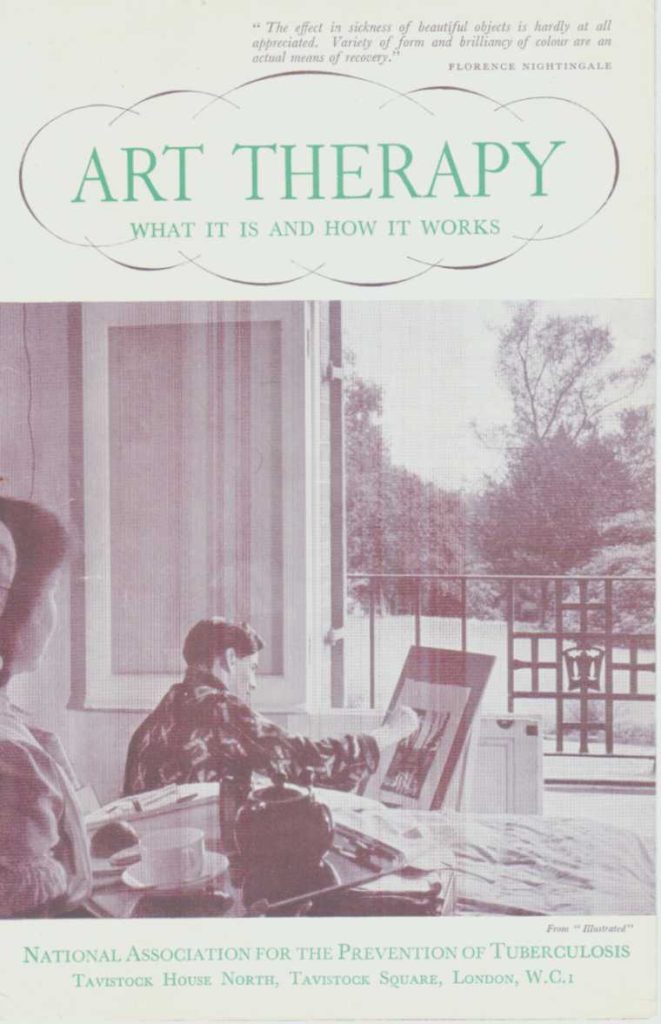
I also kept myself busy making matchstick models, and was able to do this in bed because dad had given me his ICS drawing board and this served as a workbench on my lap. That same drawing board, incidentally, served me very well over the next fifty years as it travelled with me to hospitals and to every house I lived in. I did quite a few drawings from my bed at home, mostly to amuse myself, but with the encouragement of the Welfare Officer I sent a water-colour painting to a Mr Spencer, art advisor for the NAPT (National Association for the Prevention of Tuberculosis), who assessed it for me. I still have his letter, dated 23rd May 1949 in which he was very encouraging.
I was admitted to the Royal National Hospital at Ventnor on the Isle of Wight on 26th May 1949. An ambulance with a nurse collected me from home at North Cheam and took us to Waterloo station in London; in a reserved compartment we travelled down to Portsmouth by train and were transferred to the Isle of Wight ferry. We disembarked at the end of Ryde Pier and took the pier train to Ryde station, where another ambulance stood by waiting for us. The nurse who had accompanied me all the way from North Cheam handed over my suitcase to the ambulance driver, said goodbye and returned on the ferry to the mainland.
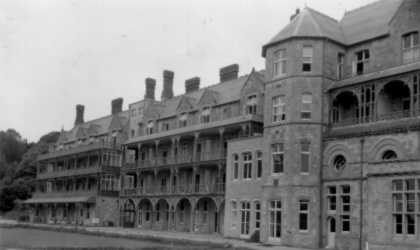
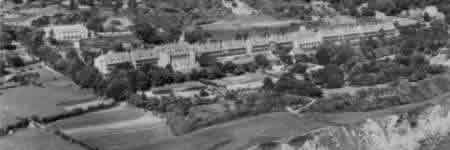
The Royal National Hospital for Diseases of the Chest (RNH) was an imposing Victorian building, built in a straight line about a quarter of a mile long, situated on about twenty acres of land with extensive gardens overlooking the sea at Ventnor under-cliff. The building, I was later to discover, was made up of eleven separate blocks plus the hospital chapel; all of these were joined together with interconnecting rooms on the ground floor and a vast underground tunnel running the whole length of the basement, each block having access to the tunnel via a set of concrete stairs, sixteen stairs in all.
The building faced the south and the blocks ran from east to west: each block was a separate ward consisting of two cottages, each cottage with three floors and a basement. The upper floors had six bedrooms to each block, each with French windows opening on to a balcony overlooking the lawns. The lower floors had sitting rooms, ward kitchens, bathrooms, washrooms, toilets and the ward offices.
The female wards were at the east end of the hospital and the male wards to the west. St Luke’s Chapel was situated in the centre of the building, between blocks 4 & 5. The main dining room was in block 9, and this was a large room which also served as a concert hall when required, as it had a large stage. This block also housed the main kitchens and staff rooms on its upper floors.
Many other facilities were available in various parts of the hospital and in the grounds and out-buildings. There were excellent medical and surgical facilities, an operating theatre (which I never saw), a very busy radiography department where I had a great number of x-rays taken, various laboratories, a physiotherapy department and a dental surgery, to name just a few.
There were libraries, games rooms, a billiard room where I enjoyed many games of snooker during my latter months there, and a shop which sold sweets, post cards, writing paper, etc. Films were shown in the patients’ library, which was also used for whist drives, one of the rare occasions when male and female patients were allowed to mix.
The excellent gardens were very popular with the patients when we were allowed to take what was known as “In Walks”, a privilege afforded to those who had sufficiently recovered from their initial treatment in the ward.
The next stage of “Promotion” was the “Out Walks”, which allowed us to walk outside the hospital grounds and many of us walked as far as the town of Ventnor, or took organised coach trips to other parts of the Island, an indication that we were very soon to be allowed to go home.
There was also a hospital radio, run entirely by the patients, music and messages being broadcast to the dining room and to every ward via the patient’s headphones.
Occupational Therapy was a very important social and diversional activity at the hospital, and we were very fortunate during my time there to have as our Occupational Therapist Miss Violet Pilling, who was a very accomplished artist as well as an excellent teacher in many forms of occupational activity. At first, while still confined to my bed, I passed my time making very small models out of matchsticks, the hobby which I had started at home and continued at Ventnor.
I decided to try watercolour painting for a change, at a time when Miss Pilling was recruiting would-be students for her art classes, but I didn’t prove to be very successful at this.
However, one day on her rounds of the wards, she discovered me doing pencil sketches of the other patients and freehand sign-writing, a hobby I had learnt in the army. She watched me drawing the letters with a pencil on the sketch pad and asked if I had ever used a flat-nibbed pen; when I said no she offered to teach me “the proper way to do lettering” and not the “built-up” method that I had adopted. She said I would need patience and that I should stick strictly to her training method and not be tempted to advance too quickly.
She went to a lot of trouble to get the right equipment for me; somehow she obtained a quill, some reed pens and some Chinese stick-ink. I was taught how to make up the ink by grinding the sticks and adding the right amount of water; I was also shown how to sharpen the end of the quill to form a nib. To do this she borrowed my penknife which I always kept for sharpening pencils and took it to the hospital carpenter to grind the small blade to the correct shape required for shaping a quill (hence the name “Pen Knife”).
With the help of a drawing board, etc., she set to work to teach me Calligraphy (although she never actually used the word – preferring to call it “Lettering”).
Miss Pilling turned out to be an excellent teacher to whom I have been extremely grateful ever since. She watched over my early efforts almost every time she visited the hospital and when satisfied that my work was acceptable she persuaded the Ward Sister to display a sample on her notice board. I knew then that I had passes the supreme test.
In the meantime Miss Pilling often spoke of her own early training at art college under the famous Edward Gill, himself a student of Edward Johnston. During my training Miss Pilling kindly loaned me her cherished copy of Edward Johnston’s book “Writing and Illuminating and Lettering” which I carefully read and took notes from. I later bought my own copy which I still have on my book shelf.
A few weeks before I was discharged from the hospital, I was surprised to hear from the Ward Sister that Miss Pilling had left the hospital, but had left me a small gift and a note saying how pleased she was with my progress. She said I was now proficient enough to advance to the use of metal nibs, which of course were much easier to use, and she had enclosed a set of these on a card. Needless to say, I started using them straight away and have never gone back to using a quill since that day.
During my stay at the hospital I was extremely lucky to receive many visitors, as there was little restriction to visiting even on weekdays. Of course, at weekends it was a common sight, especially in the summer, to see dozens of patients with their visitors sitting out on the lawns or on the balconies having tea. I particularly appreciate the efforts of members of my family and friends who regularly made the trip from North Cheam and other parts of London, via Portsmouth. Almost every Saturday or Sunday, by car or by train from Waterloo, they crossed the Solent by ferry to Ryde and took the long, but picturesque, journey by steam train across the Island and the local bus from Ventnor to the hospital. They were always cheerful and always pleased to see me, as was I to see them, in spite of their long journey home again.
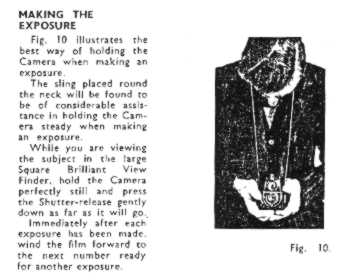
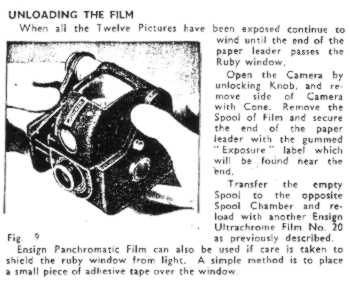
My parents bought me an Ensign “Ful-Vue” camera while I was at the hospital, and I put this to very good use especially in the grounds. The annual event which attracted many patients, ex-patients and visitors was the Whitsun Fete, held on 6th June in my year there. We all looked forward to that.
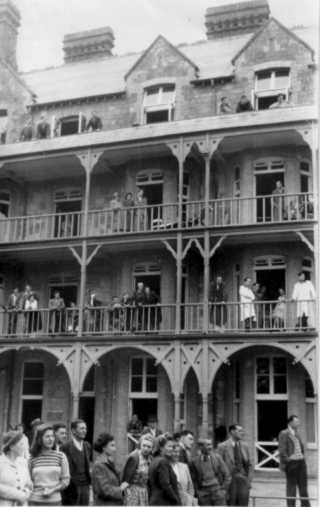

12th September 1949.
24th September 1949.
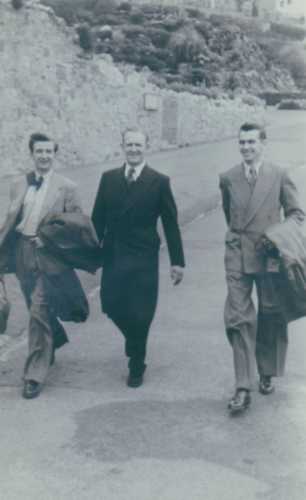
I was at the RNH a total of eight months, which was the average length of time for most patients.
I was one of the lucky ones who only needed bed rest, as many others underwent various treatments. One such procedure was an Artificial Pneumothorax, where the lung was artificially collapsed in order to rest and relax it, by introducing air through a hollow needle between the lung and the chest wall, this air being periodically replaced by “Refills” whenever necessary. Many of my fellow patients joined the weekly, or sometimes more often, “Refill Parade” which often caused some hilarity and an occasion to look forward to…
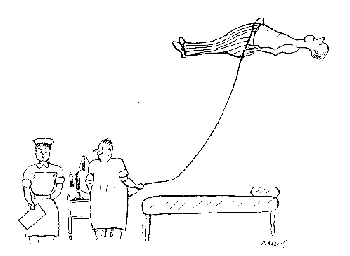
Three attempts to give me an Artificial Pneumothorax was made by Dr Laidlaw on 28th May, soon after I was admitted to the hospital, but they failed to take. As no drugs for the treatment of Tuberculosis were yet available, the only option open to the doctors was to prescribe bed rest which, along with excellent care from the staff, high quality food consisting mainly of dairy products and fresh vegetables from the kitchen gardens and plenty of fresh air, attributed to my eventual discharge from the hospital to go home on 7th December 1949.
Home was still at Malden Road, North Cheam. I was again placed under the care of Dr Harwood at Sutton Chest Clinic, St Helier Hospital, and had to report to him monthly for x-rays and for medical examination. My progress continued to be satisfactory but a return to work was not imminent at this stage: I was ordered to take things very easy, get plenty of fresh air and take long walks every day, which I did.
On Saturday 22nd April 1950, I made my first and only visit to the football stadium at Wembley: dad got the tickets for the match and we saw the Amateur Cup Final of the Schools Challenge Cup.
On Saturday 27th May 1950, my friends Stan and Win were married at South Harrow, and I was the Best Man.
During 1950 Derek had completed his National Service in the army and had joined the London Vidarians Walking Club. He became an active member and all the family turned out for the race events at Mitcham Common to give their support. I joined the Club as a non-active member and was elected to the Committee. Dad was also a Committee member and was later appointed a Vice-President for his services in providing transport for the Club.
Convalescence was a slow process in those days and it was several months before the doctor considered me fit enough to undergo some training for light work. In the meantime I had enrolled at Sutton Art School and took a special commercial art course in the Summer 1950 term, which included life drawing, commercial design and a class in “Lettering”.
I was forced to give up this course mid-term because the hospital Almoner had arranged for me to attend a watch and clock repair course at the government training centre at Waddon. I started at there on 14th August 1950, and this was intended to be a seven-year apprenticeship condensed into a three-month course.
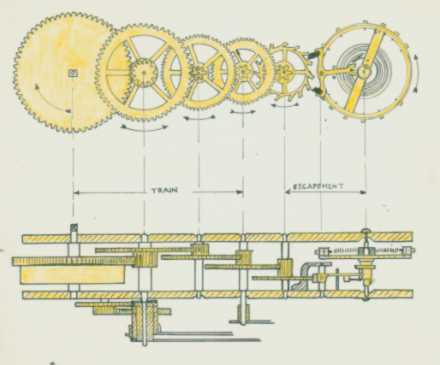

Unfortunately, I never quite made it; I worked on clocks only for the first month of the course, then suffered a relapse.
On the morning of 10th September 1950 I suffered a bad Haemoptysis and remained in bed, and my parents sent for the doctor. Consequently, I was confined to bed again for another four months, awaiting a vacant bed at St Helier Hospital. I was eventually admitted on 18th January 1951, my weight at that time – 8 stone 7 pounds (~54 kgs).
On Saturday 31st March 1951 Fred and Dorothy were married at Worcester Park. However, I was in St Helier Hospital at the time awaiting my operation and so was unable to attend the wedding.
St Helier was a General Hospital, but had two isolated Chest Units. The male wards were on the ground floor with large French-windows opening out on to the gardens and the female wards were situated above this on the first floor, with a balcony.
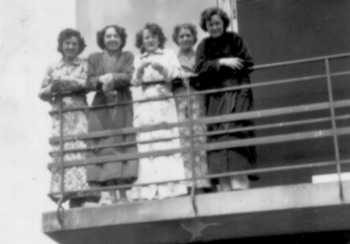
June Dunning, far left.
My chest physician, Doctor Harwood made another attempt, on the 29th January 1951, to administer a right Artificial Pneumothorax but this failed, as it did when previously attempted at Ventnor two years earlier. I was then referred to Mr Bromley, the chest surgeon, who explained that he would like to operate, but first there would be a three-month preparation period. I remained in hospital during this time but was allowed to get up and walk around to build up my strength in readiness for the operation; I also took special exercises from Miss Kyper, the physiotherapist.
The operation, known as a “Plombage” took place on 26th April 1951 in the theatre at St Helier under local anaesthetic. It involved inserting fifteen plastic balls in the chest cavity to prevent the lung fully expanding. The balls were about one and a quarter inches in diameter with a hole through the centre so that they could be strung together, with gold wire I think. The operation was carried out by Mr Bromley, took about five hours and I remained conscious all the time, as the surgeon found it necessary to talk to me.
I remained in the chest ward for another four months after the operation, which was a great success and I gladly “suffered the torturous exercises” at the hands of my physiotherapist, the previously-mentioned Miss Kyper. Thanks to her and the medical and nursing staff, I gradually regained my strength and recovered sufficiently to await transfer to a convalescence hospital in due course.
During my recovery period at St Helier’s, the patients were encouraged to participate in occupational therapy: we did play-reading, watched some films (from a projector), borrowed a lot of books from the hospital’s mobile library, and I continued with my Lettering exercises. I even taught the art of Lettering to one of my fellow patients.
The occupational therapist started the idea of compiling a magazine comprised of original stories, poetry, drawings, etc., all contributed to by the patients of both chest units, men & women. I remember doing a drawing, probably a cartoon, for an inside page and also some work for the cover. There was only one copy – just the original work – and the book was entitled “the Paragon”; I did the title lettering on the cover. The finished book was passed around the wards both upstairs and downstairs for everyone’s enjoyment, patients, visitors and staff alike.

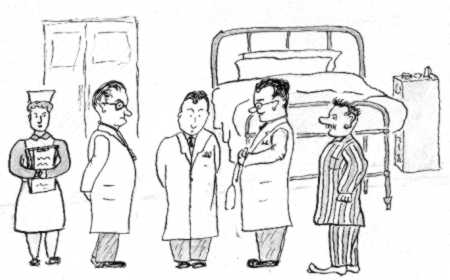
Most of the patients were spending several months in the same ward in bed and not getting the chance to meet other patients, so our book “The Paragon” proved to be an ice-breaker. More patients had a way to get to know one another, particularly when we started our own Pen-Pal club between the girls upstairs and the men downstairs.
My pen-pal was June; I had occasionally caught sight of her when the men were allowed to walk in the garden for exercise and the girls were confined to the balcony above us. June and I very soon discovered that we shared an interest in letter writing and consequently got to know one another very well. The letters got longer and more frequent and were passed by hand by the staff.
June was eventually transferred to a convalescent hospital at Cobham whilst I was still at St Helier’s, but she did visit me in the ward before she left. I think some of the nurses were relieved that they no longer had to act as postman for us.
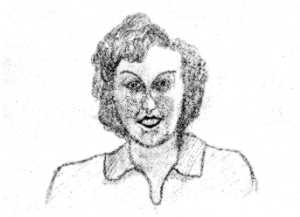
June Dunning, drawn by Alf whilst they were at St Helier Hospital, 1951.
I was eventually moved, and on 22nd August 1951 went to the men’s convalescence hospital at Comeragh Court, Golf Club Road, Woking. By now June was nearing her time for discharge from Cobham and we still continued to write those long letters. For a while we even managed to visit one another from our respective hospitals and eventually June met my parents on visiting days.

11th September 1951.
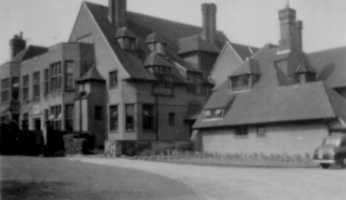
There was a billiard room for the patients where we had many organised snooker tournaments. A large lounge in the front of the house was used by patients who wanted a quiet read or somewhere to entertain their visitors. There was also a small room in the basement of the house which was fitted out as a library. Books were greatly sought after by the patients as we spent a lot of time reading in bed and we had the Red Cross to thank for providing these. An elderly lady from the Red Cross would visit us periodically to oversee the library and to order new books whenever possible, but one of the patients would normally be responsible for the upkeep of the library and the issue of books to the patients in the wards.

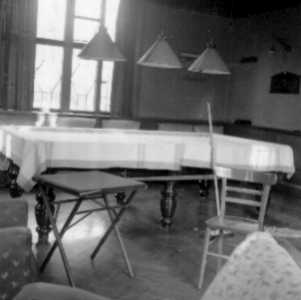
Of course, this job fell to me for several months and I enjoyed it; it also gave me the opportunity to work on my own in a quiet room with a table, where I could draw cartoons and paint posters, etc. The posters were for the Care Almoner of our local clinic area (Woking Tuberculosis Care Committee) who was organising the sale of NAPT seals prior to Christmas, this being October/November 1951.
On 26th March 1952 I was invited, along with a fellow patient, to a Conference for Library Workers at the St John Ambulance Hall at Guildford on behalf of the Surrey Hospital Libraries Committee. There must have been about two hundred librarians there and the meeting was chaired by Lady Heald. We enjoyed the day out, especially the tea and cakes in the interval…
Comeragh Court had about twenty-five male patients and a fairly high proportion of nursing and domestic staff, most of whom lived on the premises. The patients were in four main wards each with about six or seven beds. The treatment needed by the patients was minimal as we were all awaiting our discharge to go home, but the nurses were always on hand if needed and a doctor made regular visits. We also made visits to neighbouring hospitals for x-rays, etc.
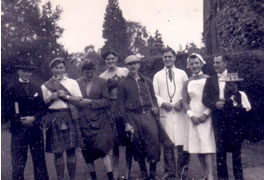
Comeragh Court was an easy-going but well-disciplined hospital, and I enjoyed my eight months there. In September 1951, shortly after I arrived there, the Sister-in-charge had encouraged the patients to hold a Fancy Dress Competition; I just took the photos!
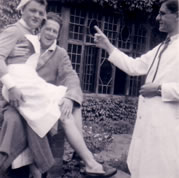
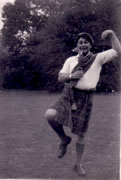
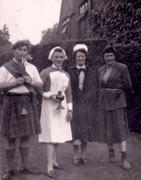
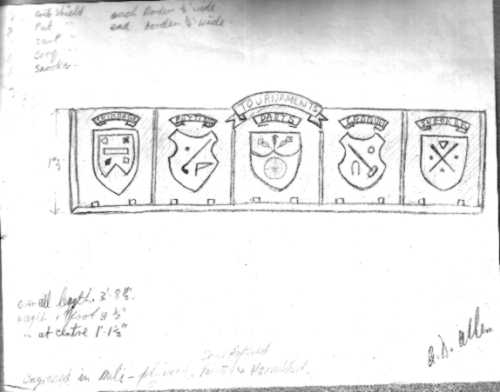
At Christmas we were allowed to decorate our wards; this again brought out the competitive spirit, but the biggest challenge and morale booster was the games tournament. We played cards, crib, snooker, billiards, putting and bowls, with the winner’s names slotted into a specially-made tournament shield on a large board, permanently displayed in the entrance hall for all the visitors to see. I believe I still have my original drawing plans for it somewhere. I often wonder how long that board survived after I left the Hospital.
I shall never forget the weeks prior to Christmas at Comeragh Court: I sat by my bed and made forty Christmas cards by hand. A friend had kindly given me several sheets of manila card which I cut up into suitable sizes, painted designs in water colours and carefully hand-lettered each one. All my family and friends received personalised Christmas cards that year.
Again I was very fortunate to have many visitors while I was at Comeragh Court. Woking railway station was only walking distance from the Hospital.
After eight months there I was finally discharged from Comeragh Court on 18th April 1952, during which time June and I got engaged to be married.