
Tooting, London, SW17.
1930-1937
It was in 1930 that we moved from Downham to a flat at No. 58 Glasford Street, Tooting. Derek was still a baby and it was my job as the elder brother to look after him, take him for walks and generally have him with me when I was playing in the streets, which we seemed to be doing most of the time when we weren’t at school.
According to history, it was on the 4th October 1930 when the Airship R101 flew over London on its way to India. I remember watching it outside our flat on a dull Saturday evening. It crashed in France during a storm the following morning.
Fred and I started school at Franciscan Road Infants and Junior Schools and later progressed to Selincourt Road School. My particular memories of Franciscan Road were the woodworking classes, which I enjoyed. I was also commended for my spelling which was probably the only subject that I was any good at! I do remember playing football as a school activity on Tooting Bec Common. It was on a cinder pitch and I got a few grazed knees from falling over there. We had our swimming lessons at Balham Baths and the only thing I remember was that someone pushed me in the water; consequently I became scared of the water and didn’t learn to swim at school.
Aunt May, uncle Harry (Flood) and their daughter Gladys lived next door to us at No. 56 Glasford Street. Uncle Harry was a shoe repairer and he had a shop at Eardley Road, Streatham. He also sold bicycle parts and accessories. Cousin Gladys was a few years older than me and also attended Franciscan Road School.
The houses in Glasford Street were terraced with no front gardens, but a small area just wide enough to park a pram separated the house from a brick coping wall surmounted with iron railings. The front doors were in pairs, one for the upstairs flat and the other for downstairs; both flats 56 and 58 were downstairs. There were no bathrooms and the toilet was situated in the back garden, next to the coal shed. A large galvanised bathtub hung on the outside wall of the coal shed; this was brought indoors on bath nights, placed on the living room floor and filled with hot water from the kitchen.
The back gardens were small but adequate; a few loose planks of wood in the fence allowed us access to aunt May’s garden and flat next door.
Dad had a Wireless Set (radio) which required an accumulator to operate it, this being before we had electricity installed. So it was my job every Saturday to take the accumulator to be recharged at a shop in Selincourt Road.
Our dad seemed to become more ill after we moved to Tooting. Although we weren’t old enough to understand at the time, he was suffering from an incurable chest complaint and seemed to spend more time away in hospital and convalescent homes than at home with us children. I do remember he was staying at a convalescent home at Worthing in 1931 or 1932 when mum took us down there to visit him. I have some good photos of our happy family group which we took at the time.
Mike says: but unfortunately, I don't have those pictures...
Dad died at our home at 58 Glasford Street, Tooting on 30th January 1933, aged 40 years and 2 months. He was buried at Streatham Cemetery, Garratt Lane, Tooting.
Mike says: My dad was 11½ when his father died; his brothers obviously younger.
We continued to live at Glasford Street for a few more years, during which time electric lighting was installed at the flat, for up to then we had only had gas lighting.
Mum was obviously finding it hard to manage with three boys to bring-up alone, so she found a lodger to live in the front room. Fred and I were also given domestic chores to do in the home and run errands to the nearby shops at Tooting Junction. Our leisure time was mostly spent playing in the streets nearby, there being very few cars about in those days; so it was a common sight to see a game of football in the street, or cricket using a lamp post as the wicket. Other street games included “marbles”; “whip & top”; “rolling a hoop”; “hula-hoop”; “diablo”; “yo-yo”; “ball-up-the-wall”; “roller skating” and cycling around the block.
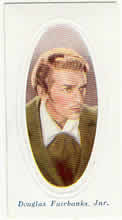


Collecting “fag” cards was probably my very first hobby; these were small picture cards, which were found in most cigarette packets and were very collectable by small boys in particular. The front face of the card displayed a colour picture of a film star, sports personality or maybe royalty; other subjects included flags, aeroplanes, ships, cars and steam locomotives.
Mike says: Oh how the colloquialisms have changed! "Fag" cards indeed…

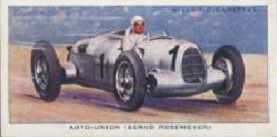
On the back of the card was a good description of the subject. The aim was to collect a full set of the cards in good condition, which would eventually prove to be valuable.
The discovery of a discarded empty cigarette packet in a waste paper bin or laying in the street would often reveal a brand new card in good condition, much to the delight of the finder.
Odd cards were used for swapping and for playing the game of “flicks”. The aim of this game was to flick your card towards your opponent’s card, which was propped up against the wall, it had to knock it down and cover it at least half way; the winner then claimed both cards to add to his collection.
An annual event that we looked forward to was Mitcham Fair held on Mitcham Common, about half an hour’s walk from home. We saved up our pocket money all the year round to go there, and one year I managed to save half a crown (2/6d, £0.125).
As Mars Bars were a 1d each our local sweet shop obliged by cutting them in half for the school kids for ½d, but when they started selling Milky Ways we bought them instead, still only ½d.
I remember going to see a Variety Show once at Balham Hippodrome, probably with mum and dad. Flanagan and Allen were performing, also Nellie Wallace. I may have gone to see other shows there although I can’t remember, but that one stuck in my mind.
There were several “Picture Houses” in Tooting in our early days there, showing silent movies, usually with a pianist to accompany the film. Buster Keaton, Harold Lloyd and Charlie Chaplin were the favourites. Saturday morning cowboy films were shown at the Broadway Cinema and Tom Mix, Buck Rogers and Hop-a-long Cassidy were worth queuing up for.
I saw my first “Talkie” on a mobile screen outside Central Hall in Longmead Road, Tooting Broadway, but it didn’t take long after that for all the cinemas to convert to showing films with sound, although still in black and white, of course. Soon, more cinemas were built or old ones converted; most of the older ones were quite small inside, but I clearly remember two enormous new cinemas being built in Tooting. One was the Mayfair in Upper Tooting, which had a stage and a giant organ, the other was the Granada in Mitcham Road, Tooting Broadway. This was in the main shopping centre and it caused a lot of excitement locally, especially amongst the children.

The Saturday morning shows and Children’s Club attracted kids from miles around and the queues formed outside the cinema were enormous. One of the big attractions at the Granada was the organ, known as the “Mighty Wurlitzer”; its first and most famous organist was Harold Ramsey. There was also a regular orchestra that played either in the orchestra pit or on the very large stage: in those days it was common to have a stage show or organ recital in the interval of the film shows. As a rule, the whole show consisted of a main feature film, plus a second film, a cartoon film, a newsreel, trailers and advertisements. I remember seeing the original version of “Mutiny on the Bounty” with Charles Laughton at the Granada Cinema. By time we left Tooting in about 1937 there were nine Cinemas there.
When I was about twelve years old I went into Great Ormond Street Children’s Hospital in London to have my tonsils and adenoids removed. I remember this occasion very well. I only stayed in hospital for one night, then mum came to fetch me the following day and took me home to Tooting by tram. We visited a cousin of hers at Holborn on the way home. Shortly after this I went to a convalescent home at Weston-Super-Mare for several weeks, which was my very first long stay away from home.
Our Uncle Max, Aunt Nell’s second husband, died whilst I was away at Weston-Super-Mare. He was a retired Chiropodist and Aunt Nell and Uncle Max had lived at Mitcham Lane, Streatham, with our cousin Win and her husband Laurie.
I had been to three different schools in Tooting by time I left at the age of 14 in the summer of 1935. My last school was in Selincourt Road, a Senior Elementary School. I seem to remember being absent quite a lot due to illness, so consequently missed most of the examinations.
During our time at Selincourt Road School, both Fred and I joined the Third Tooting Scout Troop that was attached to the school; Fred was in the Wolf Cubs.
Every year the Troop would take part in the annual Scout Concert and Jamboree that was held at the Co-op hall at Upper Tooting. I think we were present for about two years, probably 1933 and 1934. It was a grand affair that involved several weeks of rehearsals at the school beforehand and the main theme of the show was always something topical. 1933 was the year that the so-called Loch Ness Monster caused a sensation in the newspapers, so it was chosen as our theme for the Scout Concert. Dozens of boys, covered in a canopy of painted canvas formed a winding snake-like creature and paraded around the hall with only our feet showing… yes, I was one of them… and I got into trouble with the Scout Master because I kept popping my head out from under the monster’s “skirt”.
Fred must have been better behaved than me, because in 1933 he was awarded a Silver Cup as Champion Cub for the year. During the latter part of my time in the Scouts I tried to learn to play the bugle and was allowed to march with it on Church Parades, even though I couldn’t play properly. One Sunday the Standard Bearer was taken ill and couldn’t turnout for the parade, so I was told to take his place with no prior warning or training for the job. It was fine while we were marching, but I got into trouble when we were dismissed at the end of the march. I saluted, along with the rest of the troop; that’s something the Standard Bearer doesn’t do!
In spite of his Champion Cub status, I believe Fred was more mischievous than me, except that he never got caught… There was the occasion one dark evening when Fred and I joined a group of our mates strolling the streets with nothing particular to do. Two of the lads decided to push open the door of a Snooker Club to look inside, all quite innocent! Some of the members decided to chase the lads to teach them a lesson, but we were too fast for them and disappeared into the night – all except me. I got caught because I hung behind and I was only there because mum had sent me out to look for Fred…
Epsom Races played a part in Tooting’s History. The main road, Tooting High Street (now the A24) was the favourite place for school kids to congregate. They would stand and wait for the charabancs to return from Epsom taking the London punters back home. The kids would shout “throw out yer mouldies” and if they were lucky and the passengers had had a good day then the pennies would shower out from the coach windows and sprinkle over the pavement for the kids to fight over. Many times I walked the half mile from Glasford street, during Epsom week, to take my chance with the other kids and guess I may have picked up the odd coin or two sometimes, but it never made me rich.
Not many changes were made to Tooting Junction during the time we lived there, and the shops in Mitcham Road at the end of Glasford Street remained much the same. Mum belonged to the Co-op in Mitcham Road and collected the metal checks that she cashed in for her “divvy” whenever it was paid out. Next door to the Co-op was a large old house in its own grounds, which was the home and surgery of our family doctor. The house was demolished around 1934 to make way for a brand new police station; I well remember that being built. The old police station, a much smaller building at Amen Corner, is still there, I believe.
One of the neighbours living opposite us in Glasford Street was a widow; she was elderly and had a deformed hand. Aunt May was a friend of hers and I was given the task of going over to her house every day to peel her potatoes. I hated scraping the new potatoes because the old knife she gave me would tear into my fingers.
I also remember doing a milk round once I was old enough. The milkman, Ted, worked for a local private dairy, Davis of Tooting Junction. I would leave home at about 6:30 or 7:00 in the morning and have to walk about half a mile to join him on the round, where he had already started delivering. He wasn’t always in the same place each morning but I could always find him because the streets were very quiet (no cars about in those days at that time of the morning) and the sound of the wooden wheels on his push-cart and rattle of milk bottles could be heard a long way off.
Ted apparently started work at about 4 o’ clock each morning because he would have to wash and sterilise all the milk bottles in a shed at the back of the dairy before filling all the bottles by hand and putting the cardboard caps on. The bottles were in three sizes: quarts, pints, and half pints, but mostly we used the pint size on the delivery round because of the ease of handling. Even so, the bottles were thicker and heavier than nowadays and had a two-inch diameter neck. When it came to delivering to the more distant out of the way roads, Ted would load me with as many bottles as I could carry, sometimes about ten pints, one in each pocket, two under each arm, two in each hand, and send me off to deliver them on the way home while he would finish off his round and wend his way back to the cafe near the station to have his breakfast.
It took a lot of practice to carry all those bottles and I’m surprised I never dropped more than I did. However, I do remember one occasion when I dropped the lot and had to walk all the way back to the cafe to find him. I saw his cart parked outside in the curb and got this terrible feeling that I was about to lose my job when I tell him what happened, but he was very good about it, told me not to worry and gave me another ten pints.
Ted would start a second delivery about lunchtime every day after he had been back to the dairy to clean and fill the bottles again. I would help him again on Saturdays during the second delivery and have to knock on the doors for the money and shout out “Milko”. I guess that I did that milk round for about a year, from the age of thirteen until I left school at fourteen, and then Fred took over the round.
I also remember doing a paper round for a shop at Tooting Junction, but I believe I had started work by then, so I obviously had to finish the round in time to get back home and travel to work. I always used my own bike, both for the paper round and for travelling to work.
At first I had a second-hand bike but in 1936 I bought a brand new BSA Sports Bicycle. The bike was very basic, it had no gears, just a freewheel and a fixed-wheel cog on the back wheel. There was a bell and a pump and mudguards; any other accessories would have been regarded as luxuries! The hire purchase price of the bike, £5/17/- (£5.85), was a lot of money for a fifteen-year-old boy to pay out, so Aunt May, who lived next door to us, kindly offered to loan me the cash price of £4/10/- (£4.50) and I paid her back in weekly instalments. That bike was the pride of my life and the envy of all the other boys in the street, but I wasn’t to know just how well it was to serve me… after many years of continuous use, I finally sold it in 1984.

A typical 1930's bike such as this 3-Spires Gents Light Roadster cost from £3/19/9 (£3.98), including pump, pump clips, tool bag (behind saddle), a few tools, mudguards and rear reflector; note the lack of changeable gears or lights. Alf's BSA Sports Bicycle was probably made in Birmingham.
A “Sturmey-Archer” three-speed was my first luxury accessory to the bike after I had paid off my dues to Aunt May. The gear change lever was on the crossbar and of course it also involved having a new back wheel to accommodate the gear drum. Over the years, new items were added to the bike to up-date it, including different saddles, new handlebars, new brakes, tyres, mudguards, bell and lamps, etc.
Mum married again on 25th August 1934, and we continued to live at 58 Glasford Street. Our new stepfather, Charlie Anderson, was a good dad to us and he took on a great responsibility with this ready-made family of three boys. He was very keen on sport and regularly took us to Figs Marsh at Mitcham to play around with a ball. In his youth he had played football with a club at Balham and had excelled at cycle racing.
Our sister Valerie was born on 27th July 1935.
My first job on leaving School in 1935, was in the Pharmacy Department of the RACS store in Garrett Lane, Earlsfield, probably about ten minutes bike ride from home. The job involved local deliveries on the firm’s carrier bike and general cleaning and packaging in the shop. One of my tasks was to weigh-up bags of loose Sennapods for sale in the shop. A cellar below the shop was used as a storeroom and it was a tricky job climbing the steep ladder with heavy cardboard boxes. My wage would have been 13/- (£0.65) a week, but I only stayed 3 days so I never received a full wage. I was pretty upset when they said I was not required any longer and my trial period was over.
My second job was at the grocers “International Stores” in the High Street at Streatham, near to St. Leonard’s Church. Again I was a delivery boy, one of several boys and older staff working in this very busy branch. My job involved some menial cleaning tasks in the shop but most of my time was taken up with deliveries on a carrier bike.

This was virtually non-stop as the orders were mostly for well-to-do customers who insisted on having their groceries delivered at a certain time of day. The deep-cane basket of my carrier bike was often full to overflowing, sometimes just for one customer. On return to the shop the next delivery was loaded on to my bike – it took 2 men to lift the basket – and off I went again.
The delivery area wasn’t very big, probably no more than half a mile from the shop, but the customers would telephone their orders or call in the shop with their list, but rarely carry anything themselves, and all the big weekly orders were delivered by carrier bike. On one occasion I had to deliver to a big house opposite the Church, no more than two hundred yards from the shop. The basket was so heavy that when I got off the saddle the back wheel tipped up and the bike toppled over outside the house where I was to deliver. The contents of the basket spilled across the busy road and I hurriedly scrambled to pick up the goods and carried them into the tradesmen’s entrance to the house. There were several bottles of wines and spirits in the basket and laid on top were about 2 dozen eggs, most of which were broken. There appeared to be no other damage and the customer didn’t complain because nothing was said about it in the shop. My wages in that shop were 12/- (£0.60) a week and after one week I had had enough and moved on to my next job.
My third job, whilst still living at Glasford Street, was only a very short distance from my last job at the grocers. This time it was at a high-class confectioners, Fullers of Streatham High Street. Here again I was employed as a delivery boy but also helped in the kitchen, which was attached to the teashop. The main items I had to deliver were fresh cakes of all shapes and sizes, mostly creamy and always packed in smart cardboard boxes. The company was famous not only for it’s fancy cakes but also for its chocolates and candies, and these were also part of my deliveries. My wages started at 12/6d (£0.625) a week, a slight improvement to my last job, and by time I left the job several months later I was earning 15/- (£0.75) a week plus tips. The clients of this shop, which was situated in an upper-class part of Streatham, were mostly people who took morning coffee or afternoon tea in the shop, where they would meet with friends to gossip and order their fancy cakes, etc., to be delivered so they wouldn’t have to carry them home.
My delivery area covered several miles around south London, from Brixton, Clapham, Dulwich to the Crystal Palace area, Croydon, Norbury and Mitcham. Some of the nearest customers were in the big houses on north-side Streatham Common, who usually employed servants.
All my deliveries were done on a white carrier bike made especially by Halfords, a very impressive-looking bike with a small front wheel under a large white carrier box. One morning when returning from a delivery I got caught in a traffic jam at the crossroads by Streatham Hill Station; a Policeman was controlling the traffic by hand-signals. I stopped behind a horse and cart, but the horse decided to back-up and I got squashed between the cart and a motor van, which was behind me. I was temporarily knocked out but came to as the ambulance arrived. I was taken to Weir Hospital in Balham and treated for shock and bruises, whilst in the hospital I got a message from the shop to say I could have the afternoon off because of the accident, so I went home by tram to Tooting, where I lived.
The following day I returned to work to find the firm’s carrier bike in the yard at the back of the shop, it was completely buckled in two at the crossbar. Eventually I got a new carrier bike but in the meantime I had to use my own bike for local deliveries, whilst the longer distance orders were dealt with by a man from Head Office in his car. I travelled with him at Christmas time when we were extra busy and I remember it was extremely foggy. I couldn’t help noticing that he carefully selected the customers that he could rely on for good tips, while I was left in the car on these occasions.

Another thing I remember while still working at Fullers was that I needed a new lamp for the carrier bike and the manageress of the shop insisted that I bought the very latest model of Lucas oil lamp (“because it would last a long time”). This had to be cleaned and filled every week with paraffin, even though by then (winter 1935/36) battery lamps as we know them now were already in common use. I also noticed that in the cellar of the shop was a uniform and cap intended for a delivery boy, but as it didn’t fit me I couldn’t wear it, and no attempt was made to order a new one for me.
Streatham High Road, like most main roads in London at that time, had tramlines running through the centre of the road. These were a hazard to cyclists even though we had learned to live with them. A quick manoeuvre of the front wheel was all that was needed to cross the lines without catching your wheel in the rut, but it was equally important to ensure you avoided collision with another bike or other vehicle when doing so.
One evening, when cycling home from work, it was raining and the road was very slippery. The junction to Mitcham Lane outside St. Leonard’s Church was particularly busy with no policeman controlling the traffic, and I suddenly caught my front wheel in the tram line and ended up colliding with a Rolls Royce coming in the opposite direction. The bike was under the front wheel of the car and I was unceremoniously sprawled across the bonnet, having caught my knee on the car’s bumper. The chauffeur got out of the car to make sure I wasn’t too badly hurt, or that I hadn’t damaged his precious car, and then proceeded to drive away. It wasn’t until I had crossed to the pavement and tried to ride the bike that I discovered that the front wheel was buckled. I consequently had to push the bike all the way home.
Sometime in 1935 or 1936 my family persuaded me to take an evening class in geometry. I can’t think why, because I had shown no particular flair for drawing of any kind until about 1939, when the war started. The course was in a school in Upper Tooting and was for one term only. Unfortunately, after the first week’s lesson the course had to be abandoned because the teacher had died and a replacement couldn’t be found. The students were split up among the other classes because we had paid for the whole term and couldn’t get a refund. I think most of us spent the remaining weeks taking part in a Spelling Bee!
In was in about April 1936 that I decided to try my hand at factory work, and after applying to many factories in the area I eventually found a job at Venners Time Switches at New Malden, on the Kingston by-pass. This was my fourth job since leaving school. I was able to cycle there from Glasford Street, Tooting; the journey took about 45 minutes. My starting wage was about 15/- (£0.75) a week and it was to rise to 17/- (£0.85) in the two years I was there. I started in the Repairs Department as a tea boy. There were about thirty men and boys working in the department and my duties were to fetch and carry for them, collecting tea and cakes, chocolates, cigarettes, etc., from the canteen whenever they wanted it and helping the tea lady bring the heavy kettles up in the lift from the ground floor twice a day. Our department was situated on the first floor and the lift was hand-operated by rope. The mugs of tea were pint size, very strong and heavily sugared, filled to the brim with tea and the cost was one penny (1d/£0.005).
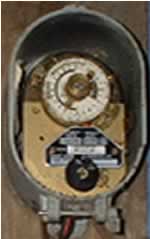

When I wasn’t acting as tea boy, I was expected to sort the scrap, which proved to be useful initial training. I was soon promoted to shop boy which allowed me to run errands to other departments, take materials for treatment to the metal finishing department and collect parts and tools from the stores. I was eventually trained to use the lathes, drills and other machines. By the time I left the firm in 1938 I was a fully qualified Time Switch Adjuster.
While we were still living at Tooting our cousin, Gladys Flood, who lived next door to us at Glasford Street, celebrated her 21st birthday. Her mother, Aunt May, asked me if I knew of any small dance bands as she was planning a Dinner and Dance for family and friends to mark the occasion. I was able to help because a fellow work-mate of mine at Venners was always talking about his brother who played the saxophone. He could, he said, gather together a small group of musicians, and so I put him in touch with Aunt May.
The outcome was that a rather grand affair was arranged and held at the Bedford Hotel at Balham. My friend from work, Eric, introduced me to his brother and we helped to set up the band on the stage. The brother explained to me that he had booked a guest pianist who was blind and asked me to meet him at the back door of the hotel and guide him upstairs to the stage, as apparently the pianist wished to avoid being conspicuous; consequently the party guests didn’t realise he was blind. The band were extremely good, especially the pianist, who was fairly unknown at the time, about 1937. His name was George Shearing…

A point of history… we had street parties everywhere in May 1935, and our street was festooned with flags and bunting to celebrate the Silver Jubilee of King George V and Queen Mary. All school children were given china beakers as a momento of the occasion.
King George V died in January 1936; the Prince of Wales became King Edward VIII but abdicated on 11th December 1936. He later married Mrs Simpson and became the Duke of Windsor. The Duke of York succeeded to the throne on December 11th 1936 and became King George VI.